
Taking the Piss out of Little Hans: Psychoanalysis, Climate Crisis, and the Anthropocene (In-Person Registration)
Drawing on Freud's famous case of "Little Hans" (1909), Kassouf explores the ways human beings are inseparably connected with the more-than-human world. Through themes of metabolism, digestion, waste, and excretion, she examines how our bodies constantly take in, transform, circulate, and return elements of the world of which we are a part.
Please join us on Saturday, September 26th, 2026
9:00am-12:15 PM EDT
This event will be held in-person at BPSI and live streamed via Zoom.
More than sixty years ago, psychoanalyst Harold Searles wrote that psychoanalysis had “skeletally limit[ed] itself to a portrayal of human beings alone....” Searles lamented that psychoanalysis paid too little attention to the nonhuman world while focusing almost exclusively on relationships between people. In this paper, Dr. Kassouf takes seriously Searles's concern in the context of today's environmental crisis and the Anthropocene—the current geological epoch in which human activity has become a dominant influence on Earth's climate, ecosystems, and geology.
Drawing on Freud's famous case of "Little Hans" (1909), Kassouf explores the ways human beings are inseparably connected with the more-than-human world. Through themes of metabolism, digestion, waste, and excretion, she examines how our bodies constantly take in, transform, circulate, and return elements of the world of which we are a part. These ordinary bodily processes reveal a fundamental reality: we are never separate from our environment but are always already deeply embedded within it.
By rereading Freud through the lens of metabolism, Kassouf offers a new way of understanding Little Hans and the anxieties that accompany our relationship with the more-than-human world. In doing so, she shows how psychoanalysis has long contained insights about our permeability and dependence on the world beyond the human, even if these insights have often gone unnoticed. Recognizing this interconnectedness, Kassouf argues, can help psychoanalysis respond more effectively to the emotional and psychological challenges posed by ecological crisis as we confront an increasingly uncertain planetary future.
Speaker
|
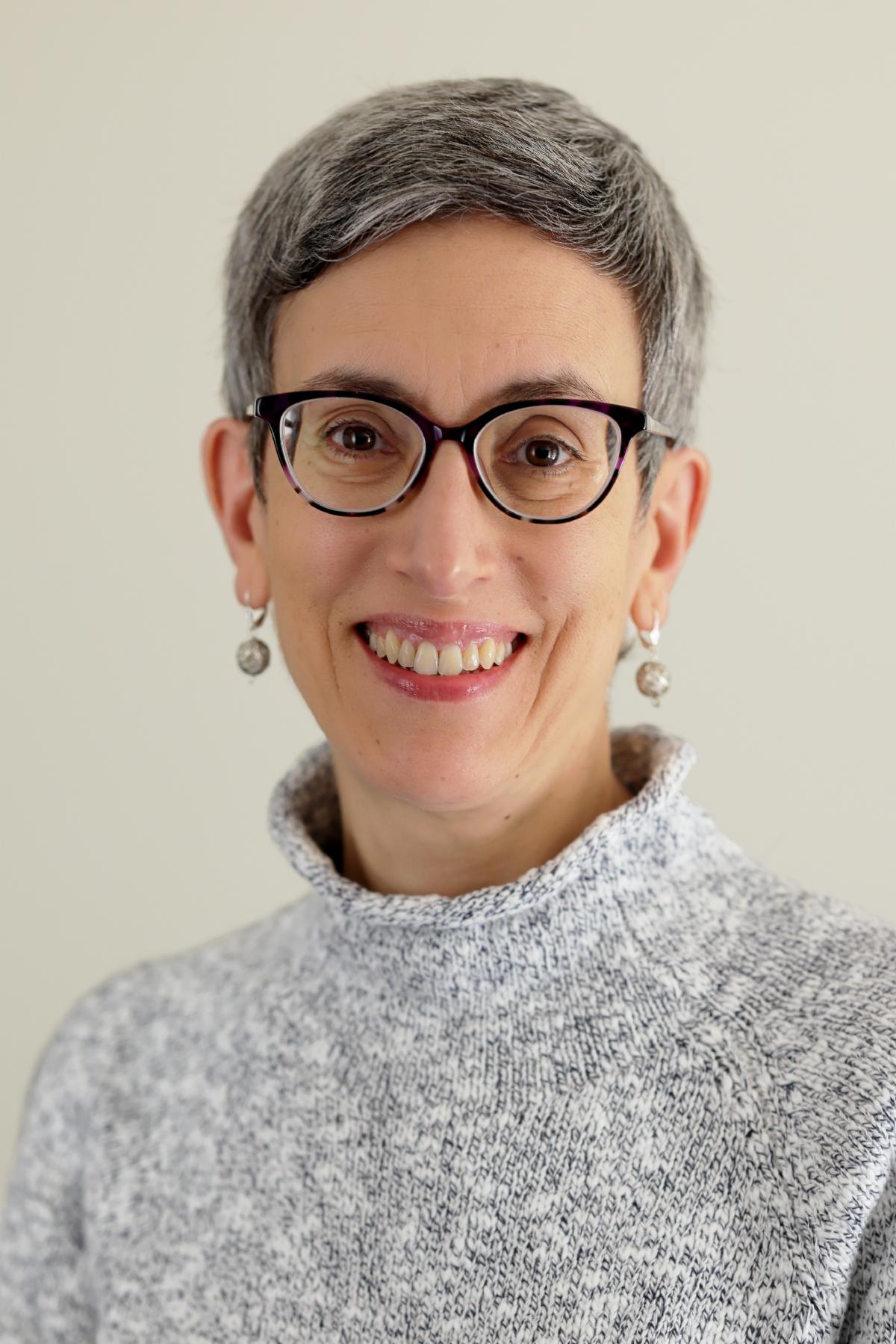

Susan Kassouf, PhD is a licensed psychoanalyst in private practice as well as a training analyst and member of the National Psychological Association for Psychoanalysis (NPAP), Training and Research for Intersubjective Self Psychology (TRISP), the Climate Psychology Alliance, the American Psychoanalytic Association (APsA) and the International Psychoanalytical Association (IPA). She writes and presents about climate change and the more-than-human, participates in several study groups grappling with environmental destruction from an analytic perspective, and consults with therapists working in the area of climate catastrophe. She is on the board of The Psychoanalytic Review and is an acquisitions liaison at ROOM. She has also translated works by and about Erich Fromm. Prior to formal analytic training, she served on the faculty in German Studies at Vassar College and worked in the non-profit / philanthropic sector for almost two decades, where she is still actively engaged.
|
Learning Objectives
At the conclusion of this program participants will be able to:
- Apply concepts of metabolism and the more-than-human to psychoanalytic understandings of human subjectivity and development.
- Identify one way in which psychoanalytic theory has historically privileged human-centered explanations of psychic life while minimizing relationships with the more-than-human world.
- Explain how attention to embodiment, permeability, and ecological interdependence can enhance psychoanalytic formulation.
Schedule
9:00am - Introductions
9:15am - Presentation
10:15am - Discussions
10:45am - Break
11:00am - Conversation with Discussants
11:20am - Q&A with Audience
12:15am - Program End
Recording
Parts of this event will be recorded. The video may also be used for educational purposes or made available for purchase. If you do not wish to be recorded, please turn your camera off.
By registering for this event, you grant permission to BPSI to the rights of your images, in video or still, and of the likeness and sound of your voice as recorded on audio or video.
Continuing Education
Physicians: This activity has been planned and implemented in accordance with the accreditation requirements and policies of the Accreditation Council for Continuing Medical Education (ACCME) through the joint provider ship of American Psychoanalytic Association and The Boston Psychoanalytic Society and Institute. The American Psychoanalytic Association is accredited by the ACCME to provide continuing medical education for physicians.
The American Psychoanalytic Association designates this Live Activity for a maximum of 3 AMA PRA Category 1 Credit(s)™. Physicians should claim only the credit commensurate with the extent of their participation in the activity.
DISCLOSURE STATEMENT: The APsA CE Committee has reviewed the materials for accredited continuing education and has determined that this activity is not related to the product line of ineligible companies and therefore, the activity meets the exception outlined in Standard 3: ACCME's identification, mitigation and disclosure of relevant financial relationship. This activity does not have any known commercial support.
Psychologists: The Boston Psychoanalytic Society and Institute is approved by the American Psychological Association to sponsor continuing education for psychologists. The Boston Psychoanalytic Society and Institute maintains responsibility for this program and its content. This course offers 3 hours of CE credits for psychologists.
Social Workers: Application for social work continuing education credits has been submitted. Please contact us at team@bpsi.org or 617-266-0953 for the status of social work CE accreditation.
Please note: Per NASW requirements, social workers must attend 80% of a course in order to be eligible for continuing education credit.
 |
Licensed Mental Health Clinicians: The Boston Psychoanalytic Society and Institute (BPSI) has been approved by NBCC as an Approved Continuing Education Provider, ACEP No. 6913. BPSI is solely responsible for all aspects of the programs. This program offers 3 NBCC Clock Hours. |
Event Cancellation Policies & Procedures
Any program participant requesting their individual program registration be canceled must submit their request in writing via email to BPSI Office at team@bpsi.org. For fee-based events, a request for cancellation (and refund using the original form of payment) must be received no later than 48 hours in advance of the event. Requests received later than 48 hours prior to the event will not be processed or accepted. All approved refunds are subject to a $10.00 administrative fee. If BPSI cancels an event, all registrants will receive a full refund of fees paid (no administration charge) no later than two business days following the scheduled date of the event, using the original form of payment.
Grievance Policy
Please address any questions or concerns about your experience at this or any program or event you have attended at the Boston Psychoanalytic Society and Institute to the Program Chair, via the Administrative Team, BPSI,141 Herrick Road, Newton Centre, MA 02459; team@bpsi.org; 617.266.0953.
The Boston Psychoanalytic Society and Institute, Inc.,141 Herrick Road, Newton Centre, MA 02459, does not discriminate on the basis of race, creed, color, sex, age, sexual orientation, national origin or handicap in the admissions, administration of its educational programs, scholarship programs or employment.